
Personal Branding for Founders: A 3-Step Framework to Build Thought Leadership
Most founders know they need a personal brand. Not many know where to start.
Here is something the biggest brands in both Hollywood and Silicon Valley figured out a long time ago.
The most successful product launches don’t start with a product.
They start with a story.
A story built to land on an emotional level with the right audience, and designed to stay top of mind long after the campaign is over.
Personal branding works in exactly the same way, with the ‘product’ being the founder or industry expert themselves. And most founders are skipping straight to step three with no clue about the existence of any other steps in the personal branding growth system.
Brandpod's founder- Ruheene Jaura- learned this firsthand herself, working on the iPhone 5 launch and a handful of other major product launches over the last couple of decades. What she kept seeing was that the brands that made the biggest impact were also the ones that had figured out how to make their audience feel something.
They did this not by luck, but by going deep into their market research, identifying the gaps, and filling those gaps in ways nobody else was.
So when Ruheene decided to build her own personal brand and establish herself as a thought leader in her space a few years ago, she decided not to hire a PR agency at all. Instead, she brilliantly reverse engineered what she had learned from some of the world's biggest brands and applied it to herself instead, turning herself into the ‘product’ to see if that would work.
And funnily enough, it did.
Within a year, she was on some of the biggest stages in her industry.
Without an agency.
Without a massive budget.
But with a lot of market research, a little AI, and a framework that works.
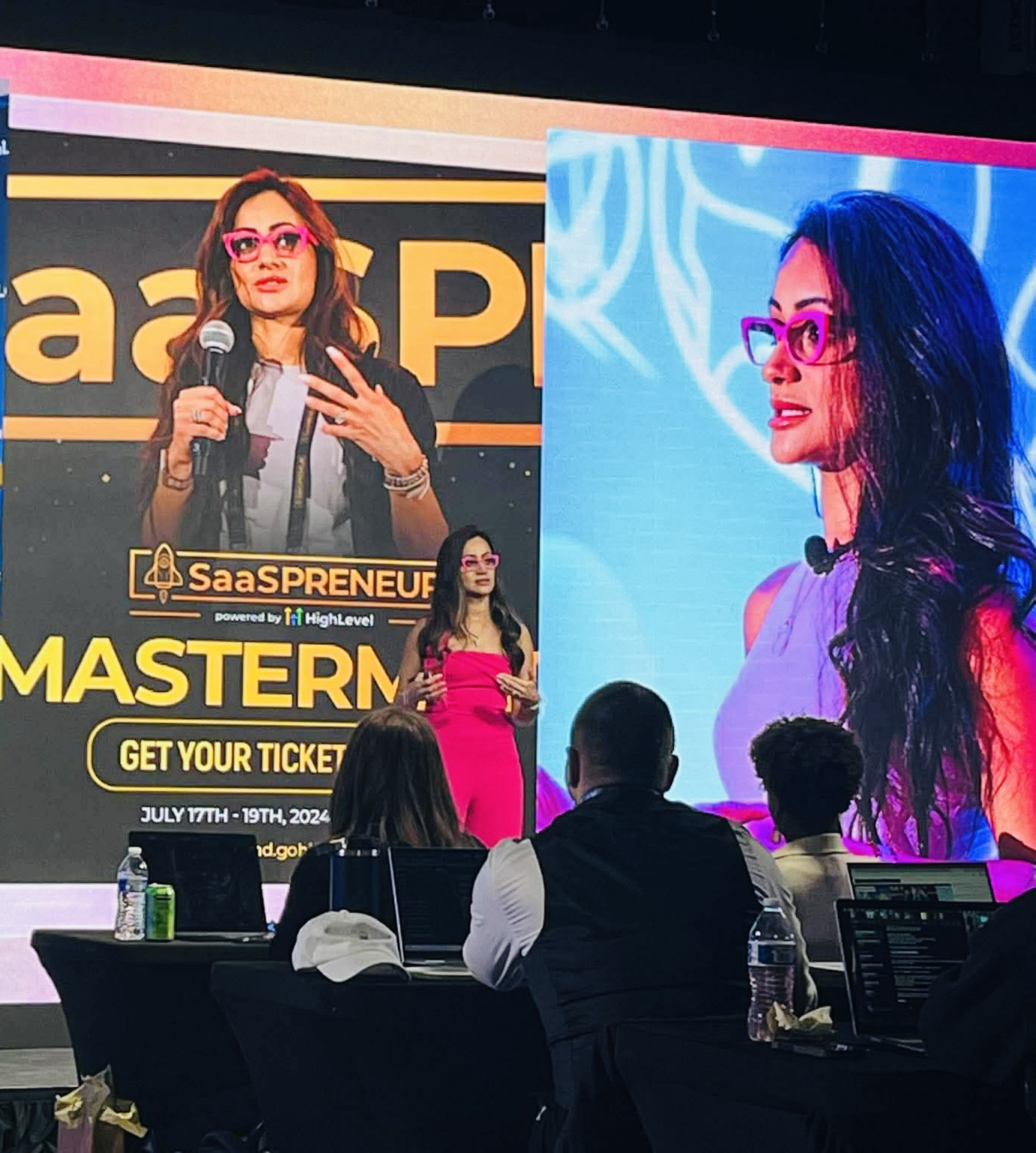
So without further ado, here is the exact framework she used so you can make it your own.
Step 1: Your Story (And Why It Has Almost Nothing to Do With You)
This is the part most people get wrong, and it is the part that makes every other step either work or not.
Your story is not your highlight reel. It is not your most impressive credential or your longest-held expertise. It is the specific, defensible intersection of three very specific things.
Getting all three right is what separates a thought leadership story from a bio nobody remembers.
The first piece: what are you uniquely good at?
Note: this isn’t about what you’re most experienced or qualified in, necessarily. It’s about what you’re uniquely good at, whether you have thirty years of experience with it or one.
It’s the thing you could probably do better than most people who have been doing it twice as long as you have, because you bring something to it that they simply do not.
Your years of experience are not the same as unique expertise. The world moves fast. Someone who figured out a new way to solve an old problem last year can be more valuable to an audience than someone who has been solving it the old way for fifteen years. Don’t let tenure convince you that you are more replaceable (or irreplaceable) than you really are.
The second piece: what is your audience actively searching for right now?

This is where most founders trust their gut when they should be looking at data. Your gut knows what you care about. Market research tells you what your audience cares about right now.
Data over intuition.
These two are not always the same thing, and the gap between them is where most personal branding stalls.
What you’re really looking for here is hard data on what your audience is searching for on Google, ChatGPT, Perplexity, or any other AI tool of choice. You want their exact search terms, not a generalization of them.
The third piece: where do you have proof?
Results. Testimonials. Case studies. Stories you have lived through and outcomes you have generated. The place where your unique skill meets your audience's need and where you can back it up.
This is your thought leadership ‘backbone’.
Your story, your content, your pitches, how you introduce yourself at events, what you say when a podcast host asks you to tell them about yourself. All of it flows from this intersection. Get this right and everything else gets easier. Skip it and you’ll earn the need to do it all again in six months.
Step 2: Finding the Channels That Are Looking for Your Expertise
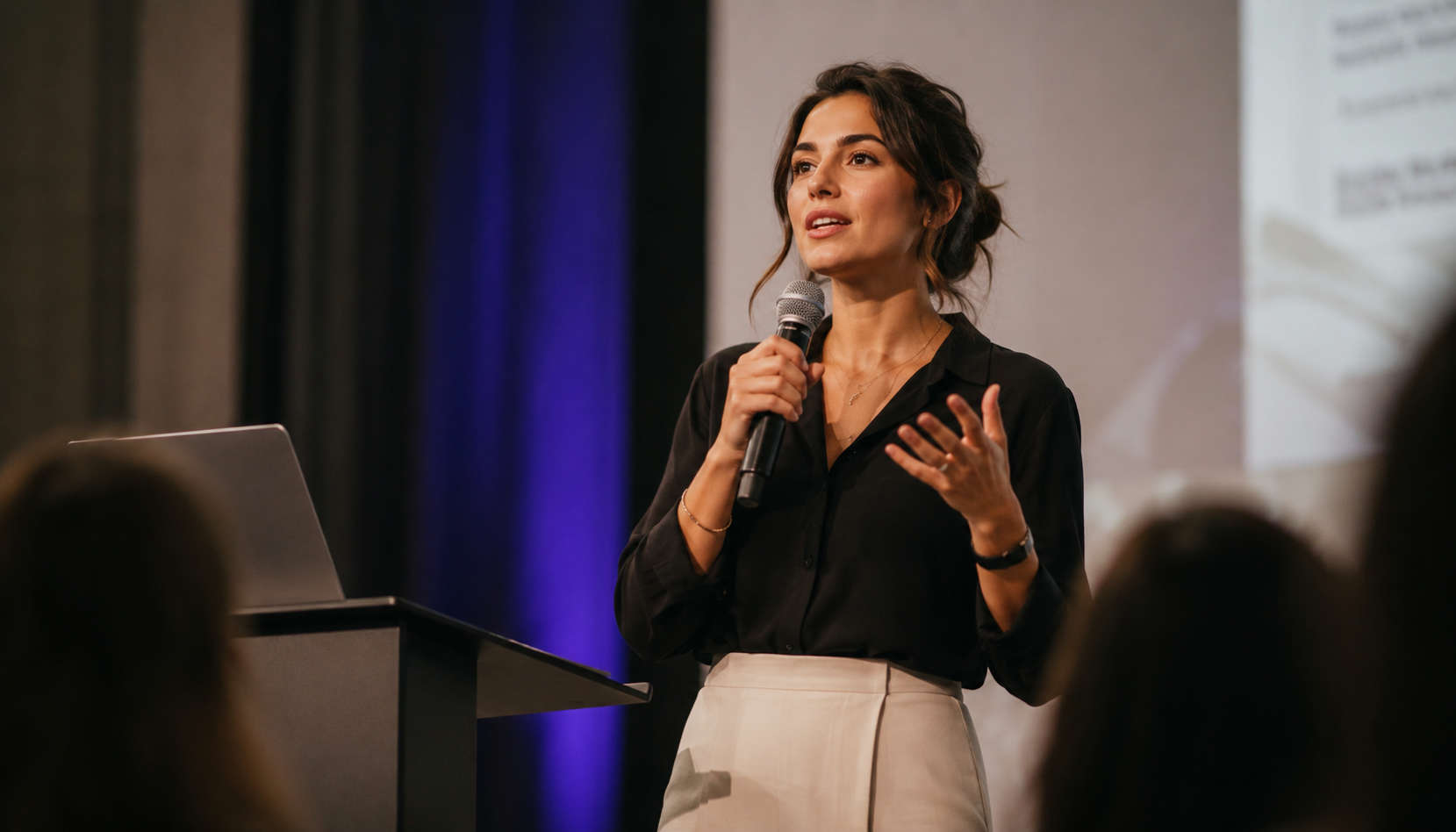
Once you know your story and you’re clear on your message and why it matters, the next move isn’t to post on LinkedIn and cross your fingers that the right people see it.
What really moves the needle is finding the platforms that already have your audience, that are actively looking for experts like you, and get in front of them there.
Podcasts first. This is the most accessible starting point for almost every founder, and it is consistently one of the fastest ways to build real visibility. The right podcasts already have your ideal audience tuned in every week. Your job is to identify which ones cover your topics, accept guest interviews, and reach the people you are trying to reach.
If you have never spoken publicly before, podcasting is also the best way to get comfortable with it. You are in a conversation, speaking directly to the host, and not on a stage in front of hundreds and thousands of people (yet). You can find your rhythm on a podcast interview before you ever step in front of a live audience- which can be a powerful step in building confidence.
Events and stages next. Once you have some podcast features under your belt, you have proof points. You have something to put in a speaker kit. You have recordings that show an event organizer what you look and sound like when you are sharing your story in front of an audience.
The key here is knowing which events in your industry are worth your time. Not every conference is reaching your people in the way you want to. The ones that matter are the ones where your ideal audience, your potential collaborators, and the hosts and organizers who can amplify your voice are all in the same room.
Publications when you are ready to write. Third-party publications borrow credibility and attach it to your name. A byline in a respected trade publication tells your audience, and the AI tools increasingly shaping what your audience finds, that you are a recognized voice in your space.
The process mirrors podcasting: find the publications your audience reads, understand what they cover and what they need, and pitch article ideas that fill a genuine gap. Editors get dozens of pitches. The ones that earn a response show that you have read the publication and have something worth adding to it.
The common thread across all three channels is the one and only ‘R’ word: research. Knowing which podcast, which event, which publication is worth your time, and approaching each one with specificity rather than volume, is what determines whether you get featured or ignored.
Step 3: Content That Works

Here is the most widespread misconception in personal branding right now. Content consistency is not about how often you post.
Read that again, because it has cost a lot of founders a lot of time, and I’m sure you have better things to do with yours.
Posting every day with content that is not grounded in what your audience is actively searching for is consistent in the worst possible way.
Consistently missing.
Consistently generic.
Consistently ignored by the people you are trying to connect with through your content.
Real content consistency is about posting on the right topics, when you do post.
Topics your audience is actively searching for.
Topics that the algorithms on every platform already know their users want.
Topics that your story and expertise can answer more effectively than most others can.
When those three things align, something shifts. The algorithm starts showing your content to the right people because it can see the match between what you’re posting about and what its users are looking for. Podcast hosts start reaching out because your content demonstrates clearly what you know and who you know it for. Event organizers take notice because you are consistently showing up as a credible voice on the topics they care about for their audiences.
We have seen this happen with founders who had not posted on social media in five years. Within a week of shifting their content to match actual search data from their audience, they started receiving inbound opportunities they had previously been chasing.
The content simply got more relevant, and more valuable. That is all it took.
The Part That Ties It All Together
When all three of these steps are working in tandem like a beautifully orchestrated choir, something beautiful happens. They stop being separate efforts and start feeding each other.
Your content gets you noticed. That gets you featured on podcasts. The podcast features give you credibility for stage pitches. The stage appearances generate publication interest. The publications bring new audiences to your content. Each layer compounds the one before it.
This is exactly how the agents inBrandpodwork.
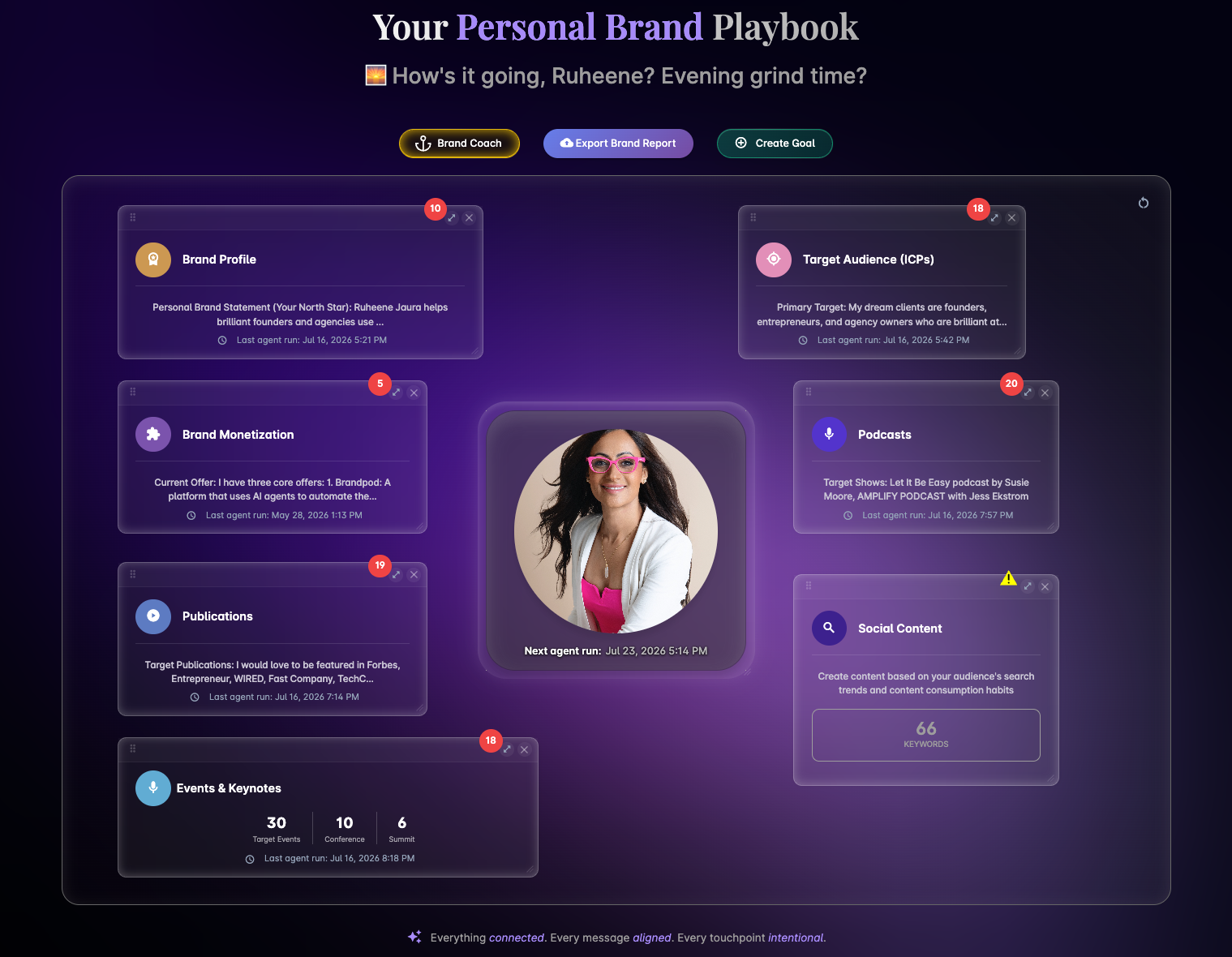
This is what a visibility flywheel looks like when it is moving. It is slow at the start. Getting the wheel turning takes real effort and real clarity on your message. But once it is moving, it builds on itself. Opportunities start coming to you rather than the other way around.
Everything else follows.
Frequently Asked Questions
How do founders build a personal brand from scratch?
Start with your story: the specific intersection of what you are uniquely good at, what your audience is actively searching for, and where you have real proof to back it up. Once that foundation is clear, identify the podcasts, events, and publications in your industry that are already looking for experts with your expertise. From there, build content grounded in real market research rather than assumptions about what your audience cares about. Most founders who follow this sequence consistently start seeing meaningful visibility within 30 days.
How long does it take to build a personal brand as a founder?
With a clear story, the right channel strategy, and content matched to real audience search data, it is realistic to land your first podcast features and start building momentum within 30 days, even starting from zero online presence. The visibility flywheel is slow to start and fast once it is moving. The founders who get there quickest are the ones who do not skip step one- their core message and ‘why’ behind the ‘what’.
What is thought leadership and how do founders build it?
Thought leadership is the credibility that comes from consistently sharing a specific, defensible point of view on the problems your audience is actively trying to find a solution to. Founders build it by identifying their unique expertise, grounding their content and outreach in what their audience is searching for right now, and showing up consistently across the channels where their audience is searching for answers.
Why is content not working for most founders?
Because most founders create content based on what they think their audience wants to hear rather than what their audience is searching for. The result is content that sounds good but fails to reach the right people, get picked up by algorithms, and attract the podcast hosts, event organizers, and editors who could be their biggest allies in amplifying their message. Matching content to real, current search data using your unique perspective is the shift that changes this.
Do founders need a PR agency to build a personal brand?
No. A PR agency can accelerate the process, but the core work of identifying your thought leadership story, targeting the right channels, and creating content grounded in market research can be done independently with the right tools and a clear framework. The only part that genuinely requires your time initially, is gaining clarity on your story, your message. Everything else can be researched and systematized.
What is the difference between a personal brand and a business brand for founders?
A business brand represents what your company does and who it serves. A personal brand represents who you are, why you know what you know, and why your perspective matters. For founders, an effective personal brand often drives more trust and more inbound than the business brand alone. People work with people, not logos and robots. The two should be complementary, with your personal brand lending credibility and humanity to the business behind it.
Want to Build Your Visibility Flywheel Without Doing It All Manually?
Join our free Facebook community for founders, executives, and experts building their personal brand. We share frameworks, tools, and the tactics that are getting our clients featured on industry-leading podcasts and stages right now, not to mention weekly calls to share how the biggest personal brands are being built today.