Database Reactivation: How We Nurtured 2,500 Warm Leads Live With CloseBot
Every time I speak at an event or guest on a podcast, a portion of the audience signs up, joins a webinar or books a call.
A few of them buy, and the rest land in our CRM and stay there.
Over Brandpod's first year, that added up to about 2,500 contacts from a live webinar, HighLevel's Level Up event, my speaking engagements and podcast appearances, referral partners and organic signups.
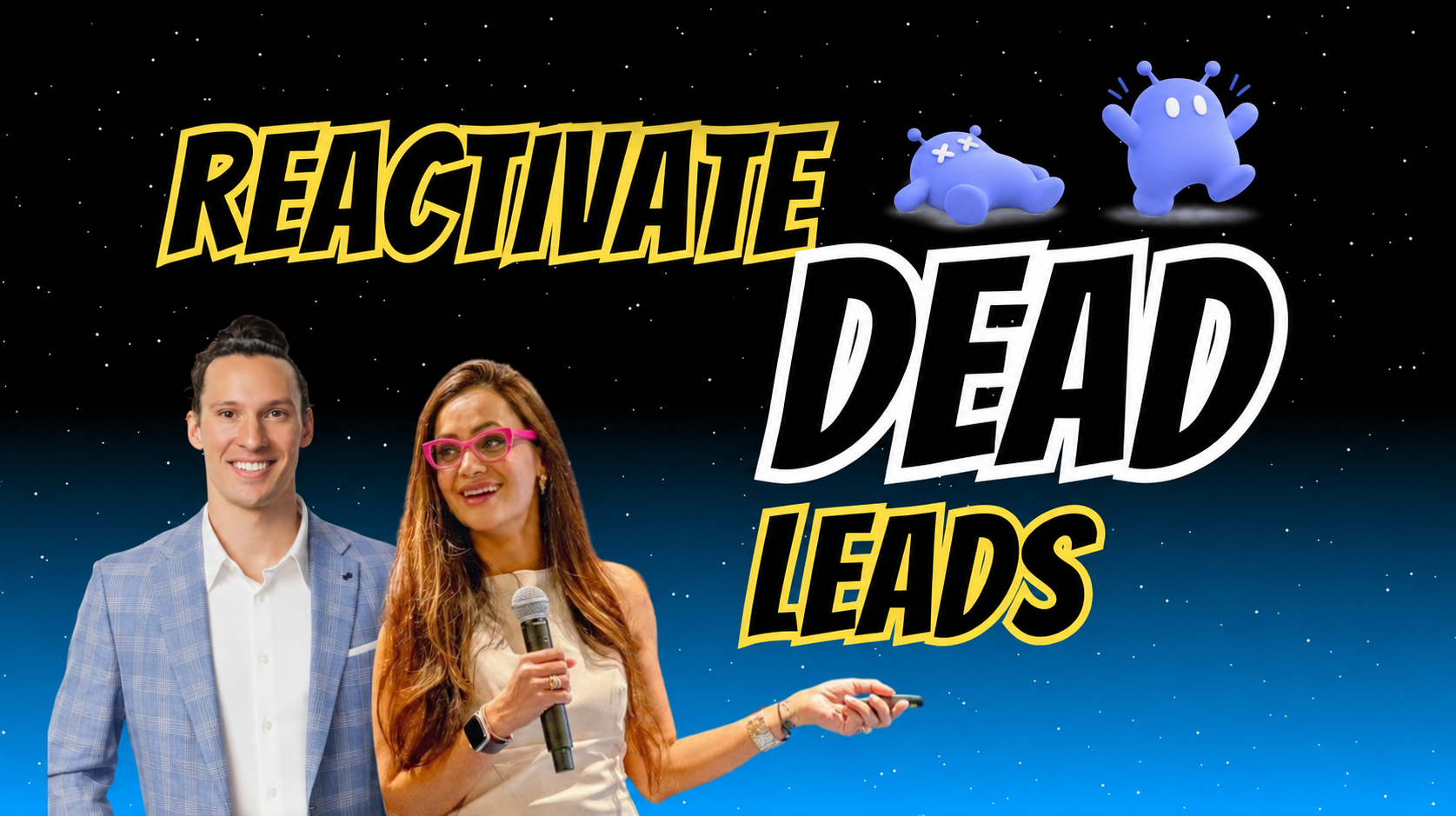
So I built a database reactivation campaign live, in front of an audience, with Bryce DeCora, co-founder and CEO of CloseBot.
Here's the full recording.
Bryce wrote up the complete technical build, all 18 steps, in his guide to database reactivation best practices.
This post covers the decisions I made along the way and what I'd tell you to do with your own list.
What database reactivation means
Database reactivation means sending a short text to contacts who already know you, then letting an AI agent handle the replies and book the calls.
The contacts are people who once showed interest in your business and then went quiet.
Why this matters if podcasts and stages are how you grow

Every interview and every talk sends people to your website, your newsletter or your calendar.
Those people are potential clients, and each appearance earns a few more of them.
Following up with podcast hosts and event organizers is a separate job, and Brandpod's pitching agents already handle that one.
This post is about the audience those appearances bring back to you, and what happens to them after they sign up.
Leave the scraped list out
I also had a list pulled from LinkedIn through an outreach tool, and it was tempting to add it.
We left it out.
Those people never asked to hear from Brandpod, so they would drag down reply rates and put a brand-new phone number at risk with the carriers.
The rule: only message people who gave you their information and agreed to be contacted.
Test the offer before you commit to it
The biggest debate in the build was whether to mention our $50 coupon in the first text.
We're testing it both ways, with half the list on each version.
Version A asks the question on its own: "Hi [first name], it's Ruheene from Brandpod. Have you given up on podcasts & stages this year? (Reply STOP to opt out)"
Three hours later, if they haven't replied, Version A follows up: "Hi [first name], if podcasts and stages are still a goal for 2027, I have a $50 Brandpod coupon for you. Want it?"
Version B puts the offer in the first text: "Hi [first name], it's Ruheene from Brandpod. Have you given up on podcasts & stages this year? If not, I have a $50 coupon. Want it? (Reply STOP to opt out)"
Both versions ask the same question in the same words, so the only thing we're testing is when the offer shows up.
Neither version sends a coupon unless the person says they want it.
Keep every text under 160 characters
A single text message holds 160 characters, and anything longer gets split and billed as two or more.
An emoji or a curly apostrophe pasted in from a doc switches the whole message to a format that only holds 70 characters, so a short text can still send as two.
We kept both versions to one message each, with a straight apostrophe and no emoji.
Start slow on a new phone number
Our number had just been registered for A2P, the carrier approval process for business texting, so it had no sending history yet.
CloseBot's guidance is that a number with years of clean history can send up to roughly 500 texts a day, while a newly registered number should start at 50.
We set an 8 AM to 5 PM sending window with weekends on and Fridays off, because Friday is the lowest-engagement day across CloseBot's message volume.
If your list is small enough to get through in a few weeks, Bryce says you can skip the Friday rule.
Route existing customers to support
Halfway through the build, I realized some of those 2,500 contacts were already Brandpod users.
A customer who gets a sales pitch from a company they already pay is more likely to cancel than buy again.
One instruction fixed it: if the contact is an existing user, the agent tags them and books them on our Customer Success calendar instead of the sales calendar.
That one line gives every current customer on the list a support check-in, and it's the step I'd copy first.
Use one agent for texts and website chat
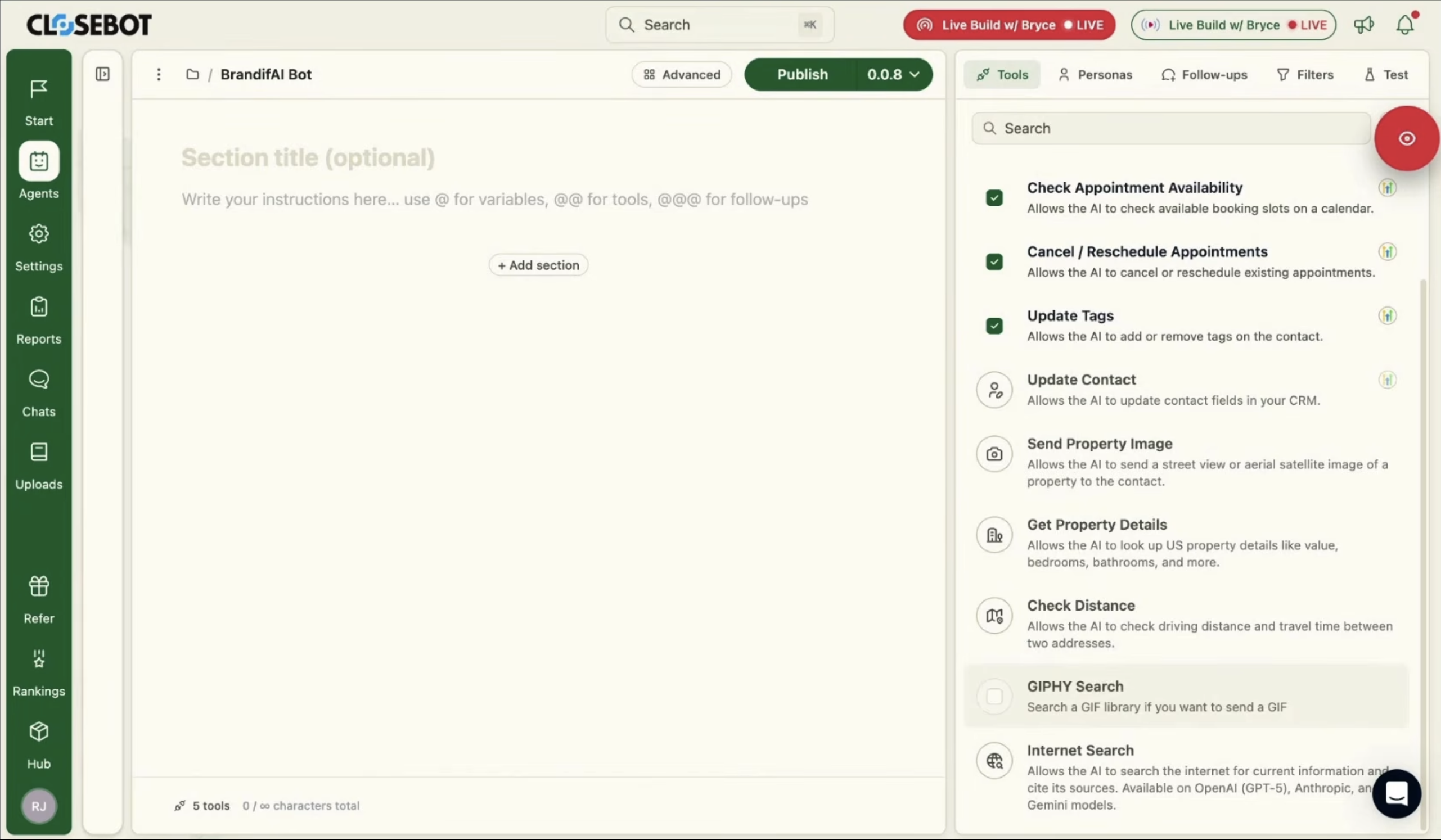
My next question was whether the chat on our website needed its own agent.
It doesn't, because one agent can run across both SMS and web chat.
That leaves one set of instructions to write, test and keep up to date.
Plan for more than one message
CloseBot ran this same playbook on its own list and published the numbers.
Their reactivation got a 40.5% reply rate (602 of 1,486 contacts) and booked 41 demos in 9 days, a 2.8% booking rate.
It took two messages on average to get a reply, and a quarter of the people who booked needed a follow-up first.
Across CloseBot's aggregate data, the longest gap from first contact to booking was just under a year.
A campaign that stops after the first text leaves most of those bookings on the table.
What we're watching first
Our A2P registration was just approved, and the campaign starts sending this week.
I'll update this post with the results, including which version of the first text won.
You already did the hard part when you got on that stage or that podcast and someone signed up because of it.
Texting them back is the part most of us skip, and it's the cheapest step in the whole process.
Frequently asked questions
What is a good booking rate for database reactivation?
CloseBot's platform data puts a typical booking rate at 2% to 5% of the contacts you message. Its own reactivation campaign booked 2.8% of contacts in nine days.
Should I put an offer in the first text?
We're testing that ourselves. One version offers a $50 coupon in the first text, and the other asks a question first and offers the coupon three hours later if the person hasn't replied. We'll share which one booked more calls once the campaign has run.
How long can a reactivation text be?
Keep it under 160 characters so it sends as one message. Leave out emoji and curly apostrophes, because either one drops the limit to 70 characters per message.
How many texts a day can I send from a new number?
CloseBot recommends starting at 50 contacts a day on a newly registered A2P number. A number with years of clean history can send up to roughly 500 a day.
Do I have to tell people an AI is replying?
In some places, yes. Bryce notes that the EU requires disclosure and a handful of US states have bot-disclosure rules, with California's being the best known. Check the rules for where your contacts live, because this is general guidance and not legal advice.
Should I text contacts I scraped from LinkedIn?
No. Only message people who gave you their information and agreed to be contacted. A scraped list lowers your reply rate and can get a new number flagged by the carriers.
Should existing customers be in a reactivation campaign?
They can be, as long as the agent routes them to customer success instead of sales. A tag and a separate calendar handle it.
Join our free community for thought leaders and personal branding. Look for the pinned YouTube resource walking through our full 7-step visibility framework: